MWM acquires Picnic: a first step toward a Bending Spoons–style build-up model?
📩 To contact the editorial team: editorial@startup-in-europe.com

MWM has just completed the acquisition of Picnic. The deal raises questions about the group’s ambitions at a time when build-up strategies are gaining traction. As creating new applications becomes more uncertain and costly, integrating assets already validated by the market—and then scaling their distribution and monetization—appears to be an increasingly credible alternative.
Founded in 2019 in London, Picnic established itself in less than two years as an efficient utility app, addressing a widely shared pain point: managing photo libraries on smartphones. With 2 million users, €4 million in annual recurring revenue, and a profitable operation, the company presents a relatively rare profile in consumer mobile—combining rapid but controlled growth without excessive reliance on hype cycles or heavy infrastructure.
For MWM, a French player known for its consumer apps in music, creativity, and productivity, this acquisition reflects a shift from its historical development model. Since its founding in 2012, the company has operated as a studio capable of designing, launching, and monetizing applications at scale, leveraging deep expertise in distribution and user acquisition. MWM had already carried out similar moves, notably with the acquisition of SwipeWipe and Sincerely in recent months. With Picnic, the company steps up a gear by integrating a high-performing asset.
From a studio logic to a hybrid approach
Until now, MWM’s growth has primarily relied on a “build” model, based on its internal ability to identify use cases, develop applications, and bring them to maturity. The acquisition of Picnic opens a second path—the “buy” approach—consisting of capturing existing value and amplifying it through distribution and monetization levers.
This approach is not new and has been industrialized at scale by players such as Bending Spoons, whose strategy revolves around acquiring existing apps—often under-optimized—before integrating them into an industrial platform. In this model, value creation relies less on product innovation and more on systematic optimization: pricing, user acquisition, retention, and cost structure.
MWM does not yet operate at that level of standardization. But the Picnic deal can be seen as an initial step in that direction.
Distribution as the decisive factor
The transaction highlights a broader shift in the mobile app economy. For a decade, value creation was largely tied to product innovation. Today, in a saturated market, distribution capabilities are at least as critical.
Major platforms such as the App Store and Google Play concentrate attention but make organic emergence increasingly difficult. In this context, publishers with a portfolio of apps and strong acquisition expertise can act as accelerators for products that are validated but still lack visibility.
This is precisely where MWM’s potential lies: a deep understanding of optimization mechanics, built on more than one billion cumulative downloads. Picnic brings the product; MWM brings the ability to scale it.
The key question is whether this strategy will be pursued and formalized. Moving from a hybrid model to a true build-up strategy requires disciplined acquisitions, standardized tools, and the ability to integrate teams and products without degrading quality.
An open trajectory
At this stage, the Picnic deal alone does not signal a fully established shift in model. It does, however, outline its contours. It suggests that a European mobile player may seek to expand its scope by combining internal production with external growth, in a market where exit opportunities for profitable but non–hyper-scaled startups remain limited.
If MWM multiplies such operations while progressively structuring a repeatable approach, the company could evolve toward an application operating platform model. Otherwise, Picnic will remain a coherent but isolated acquisition.
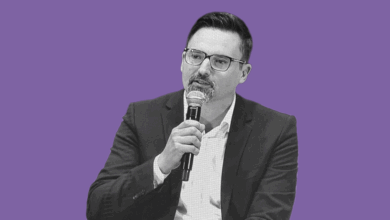
Contacted by STARTUP IN EUROPE, Jean-Baptiste Hironde, founder and CEO of MWM, confirmed that “this acquisition is fully aligned with the company’s strategy and that others will follow shortly.”
In a market where differentiation increasingly depends less on technology alone, the question may no longer be who builds the best applications—but who knows how to make them exist at scale.