START Summit: When Switzerland Brings Together Europe’s Early-Stage Ecosystem
📩 To contact the editorial team: editorial@startup-in-europe.com
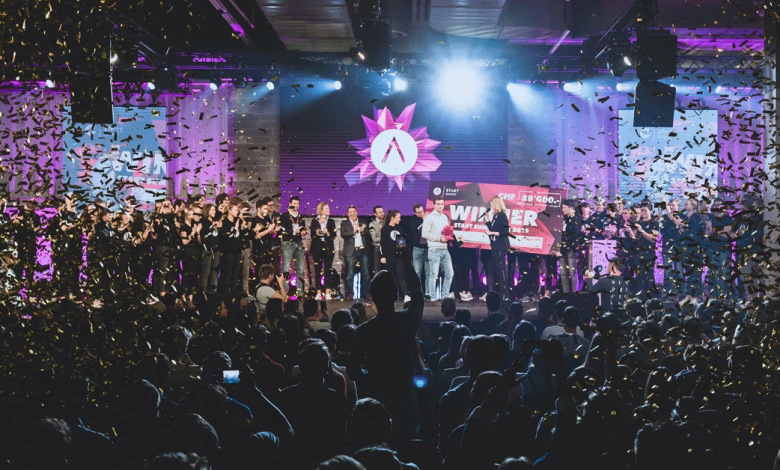
Each year, for two days, the Swiss city of St. Gallen becomes a convergence point for the European startup ecosystem. The START Summit, organized by the association START Global at the University of St. Gallen, brings together several thousand entrepreneurs, investors, and executives who come to observe emerging trends in European technology.
With around 7,000 participants, more than 1,300 startups, and over 1,000 investors, the event has gradually established itself as one of Europe’s key gatherings for early-stage ventures. More than a conference, START Summit operates as a meeting platform between founders and investors, supported by a matchmaking system that enables several thousand meetings to be scheduled during the event.
In an environment where deal sourcing is becoming a competitive advantage for venture capital funds, these gatherings are playing an increasingly structuring role in the venture ecosystem.
A conference turned dealflow platform
Major technology conferences have gradually evolved. Whereas they once primarily served as spaces for visibility and networking, they now tend to function as temporary marketplaces for venture capital.
START Summit fits within this dynamic with a positioning clearly oriented toward the pre-seed and seed stages. Selected startups take part in pitch sessions, one-to-one meetings with investors, and targeted networking formats.
For venture funds, the interest is twofold: identifying new founders and observing emerging technological trends across the European ecosystem.
In this sense, START Summit increasingly resembles events such as Slush or Web Summit, while maintaining a sharper focus on the early-stage segment.
A rare feature: an event organized by students
One of START Summit’s defining characteristics lies in its organization. Like Slush in Helsinki, the event originated as a student-led initiative.
It is organized by the association START Global, created within the University of St. Gallen. Each year, several hundred students contribute to the preparation and organization of the summit.
This model remains relatively rare in the technology conference ecosystem, which is often structured as commercial event companies or extensions of media groups. It gives START Summit a distinctive dynamic, strongly oriented toward young founders and new entrants to the entrepreneurial ecosystem.
The example of Slush has shown that an event born within a student context can evolve into one of the world’s leading venture capital gatherings. START Summit appears to be following a similar trajectory, with the ambition of becoming a lasting fixture on Europe’s innovation calendar.
An observatory of the new generation of founders
Beyond conferences and pitch sessions, START Summit also acts as a generational observatory of technological entrepreneurship.
A significant share of the founders present are still students or recent graduates. This reflects a broader transformation within the ecosystem: entrepreneurial projects are emerging earlier and earlier in academic careers.
The accessibility of technological infrastructure (cloud computing, artificial intelligence, and development platforms) has reduced the cost of company creation and accelerated innovation cycles. For investors, such events offer an opportunity to identify, at a very early stage, the teams that may become the founders of the next generation of European startups.
The quiet competition between European technology hubs
The success of START Summit also illustrates the competition between European ecosystems to attract talent, investors, and technological projects.
London, Paris, Berlin, and Stockholm concentrate a large share of the continent’s venture capital. Yet other cities are seeking to position themselves as convergence points for the entrepreneurial community.
Switzerland benefits in this context from several advantages: institutional stability, attractiveness for international investors, and the presence of well-regarded universities. St. Gallen, while not a major technology hub, becomes for a few days a temporary crossroads of European innovation.
Conferences as the new infrastructure of venture capital
Beyond the event itself, START Summit illustrates a broader transformation in the functioning of venture capital.
Technology conferences are increasingly conceived as informal infrastructures of the venture market, facilitating the circulation of information, encounters between founders and investors, and the structuring of entrepreneurial communities.
In an environment where competition between funds is intensifying, such events act as accelerators of meetings capable of concentrating, within a few days, a volume of opportunities that might otherwise take months to emerge.
Behind the energy of technology conferences, a more structural reality is taking shape: these gatherings are gradually becoming one of the key interfaces for financing innovation in Europe.
START Summit: practical information
Held in St. Gallen at the University of St. Gallen, START Summit will take place on March 20 and 21, 2026. The event gathers around 7,000 participants each year, including more than 1,300 startups and 1,000 investors. It is primarily aimed at early-stage founders, venture capital funds, business angels, and student entrepreneurs. The program includes conferences, pitch competitions, and meetings organized through a matchmaking platform. Ticket prices typically range from around €100 for students to nearly €900 for investors.