Why PASQAL Must Go Public to Finance Its €340 Million Quantum Project
📩 To contact the editorial team: editorial@startup-in-europe.com

Quantum computing belongs to that rare category of technologies whose scientific promise precedes industrial maturity by many years, sometimes even decades. For the companies engaged in this field, the challenge is not purely technological. It is also financial: how can long innovation cycles, complex infrastructures, and highly specialized research teams be funded?
It is in this context that Pasqal, one of Europe’s leading quantum computing startups, has announced a financial transaction of at least €340 million, combining a private funding round and convertible financing. The operation represents a first step toward a planned dual listing on Nasdaq and Euronext Paris, envisaged from 2026 onward.
The transaction is structured around a merger with the SPAC Bleichroeder Acquisition Corp. II, valuing the company at $2 billion (approximately €1.7 billion). Bleichroeder is led by French executive Michel Combes.
A sector where capital requirements exceed venture capital
The quantum computing industry requires increasingly significant investments at the very moment when the technology is entering a phase of industrialization.
Building a quantum computer involves sophisticated experimental infrastructure, complex optical or cryogenic equipment, scientific teams drawn from fundamental physics, and the ability to transform experimental systems into machines that companies can actually use.
In its statement, Pasqal specifies that the funds raised, along with the capital that could be secured through a public listing, will be “primarily invested in the company’s infrastructure in France in order to accelerate research and development and strengthen its industrial capabilities.”
This marks an important signal for a sector that, until recently, still raised questions about its long-term viability. Quantum companies are no longer merely scientific projects. They are becoming industrial organizations requiring levels of investment comparable to those seen in semiconductors or biotechnology.
Industrializing quantum technology from France
The announced investments are expected to support the expansion of Pasqal’s operations in Palaiseau, in the Essonne region near Paris, where the company’s headquarters are located.
The company plans in particular to:
- double its production capacity within twenty-four months,
- increase its workforce by around 20%, with approximately 50 additional hires over the next eighteen months,
- intensify its research efforts to develop a fault-tolerant quantum computer by the end of the decade.
These objectives reflect the ambition to reach a decisive milestone: moving from scientific prototypes to machines capable of performing complex computations at scale.
A coalition of industrial and institutional investors
The financing round brings together a group of investors reflecting the growing interest of large corporations and public institutions in quantum technologies.
Among the new investors are Quanta Computer, LG Electronics, CMA CGM, and the investment fund Parkway. Several existing investors are also renewing their support, including the European Innovation Council Fund, Temasek, Saudi Aramco Entrepreneurship Ventures, and ISAI. France’s public investment bank Bpifrance, a shareholder since 2021, has reaffirmed its long-term commitment and will maintain its role in the company’s governance.
Neutral atoms, a distinctive technological approach
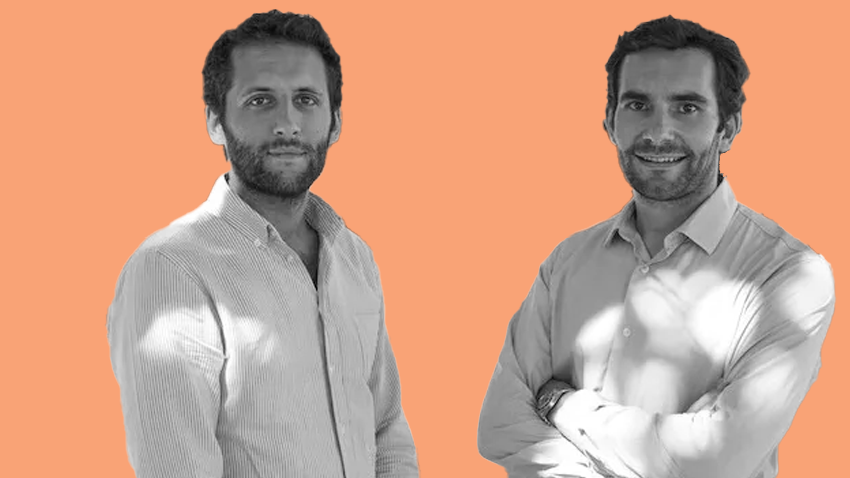
Founded in 2019 by Georges-Olivier Reymond, Alain Aspect, and Christophe Jurczak, Pasqal develops a quantum computing architecture based on neutral atoms manipulated by lasers. This approach represents one of the major technological pathways currently explored in the sector.
Other companies have taken different directions: IBM and Google primarily work on superconducting qubits, while IonQ relies on trapped-ion technology. The method used by Pasqal presents certain theoretical advantages in terms of scalability and modularity, although it remains under active development.
A market taking shape
With more than 275 employees, over 25 industrial clients, and more than $300 million in cumulative funding, Pasqal now stands among the companies attempting to transform quantum research into an operational technological platform.
Its clients include OVHcloud, Thales, CMA CGM, NVIDIA, and Sumitomo. The company is also part of the IBM Quantum Network, an international consortium dedicated to developing quantum applications.
In this context, access to financial markets could play a decisive role. Quantum companies will need to finance research, production, and computing infrastructure over many years, in an environment where commercial revenues remain only at an early stage.
The transaction remains subject to approval by the shareholders of Bleichroeder Acquisition Corp. II and by regulatory authorities, including review by the U.S. Securities and Exchange Commission of the Form F-4 registration statement, as well as listing approval from Nasdaq.